
-1.jpeg?width=1383&height=600&name=drone%20maumere-alor%20(77)-1.jpeg)
By Yeray Moreno, Head of Experience and Conservation
Before setting out from Maumere, I knew this voyage would be different.
Eastern Lesser Sunda is one of Indonesia’s more remote regions, shaped by active volcanoes, small island communities and reefs that remain wonderfully intact. It is the kind of place that rewards curiosity. As we began travelling east towards Alor, I was excited to see how this new route would unfold, but I did not expect every day to bring something completely different.
Our first stop was Pulau Babi, where the journey immediately began to show its character. Above the surface, we found a quiet white-sand beach surrounded by clear water. Below, there were healthy coral gardens, a curious sea snake and the extraordinary dive site known as The Crack.
Created by the 1992 Flores earthquake and tsunami, this underwater fissure is a striking reminder of the forces that have shaped these islands. Today, it is covered in coral and filled with life.
The next day, we explored Pangabatan Island in Maumere Bay. We spent time on a long white-sand beach before walking to a small fishing village nearby. There, we watched local fishermen haul in their nets by hand and bought some of their freshly caught tuna, which later became part of our dinner onboard.
It was a simple experience, but one that said a lot about this region and how closely life here remains connected to the sea.
.jpg?width=8064&height=4536&name=drone%20maumere-alor%20(54).jpg)
Travelling farther east, one of the most memorable days of the voyage came off Adonara. We arrived at a pristine sandbar surrounded by reef, with Mount Lewotolo rising across the water on Lembata Island.
The diving that day was exceptional. At Croco Wall, we encountered more than 20 blacktip reef sharks on a single dive, together with whitetips, green turtles and a huge eagle ray with a wingspan of around 1.8 metres.
Later that afternoon, we climbed into kayaks and paddled between small mangrove-covered islands. Thousands of flying foxes began leaving their roosts overhead, just as Mount Lewotolo started erupting in the distance. Ash rose above the volcano while lava glowed down its slopes.
That evening, we had dinner on the sandbar under the stars, with the eruption still visible across the water. It was one of those moments you could never properly plan. We were simply lucky enough to be there.
The waters around Lembata brought a different kind of beauty. At Bacatan Ledges, a curious whitetip reef shark followed us for much of the dive. In the shallows, healthy corals sheltered juvenile reef fish, butterflyfish, boxfish and a giant moray eel.
At Warawutun Village, the contrast between the black volcanic sand and colourful soft corals was striking. Dogtooth tuna hunted through schools of fusiliers while two huge Napoleon wrasse cruised across the reef, all with Lewotolo still glowing in the background.
By the time we reached Alor, it felt as though the underwater world had changed again.
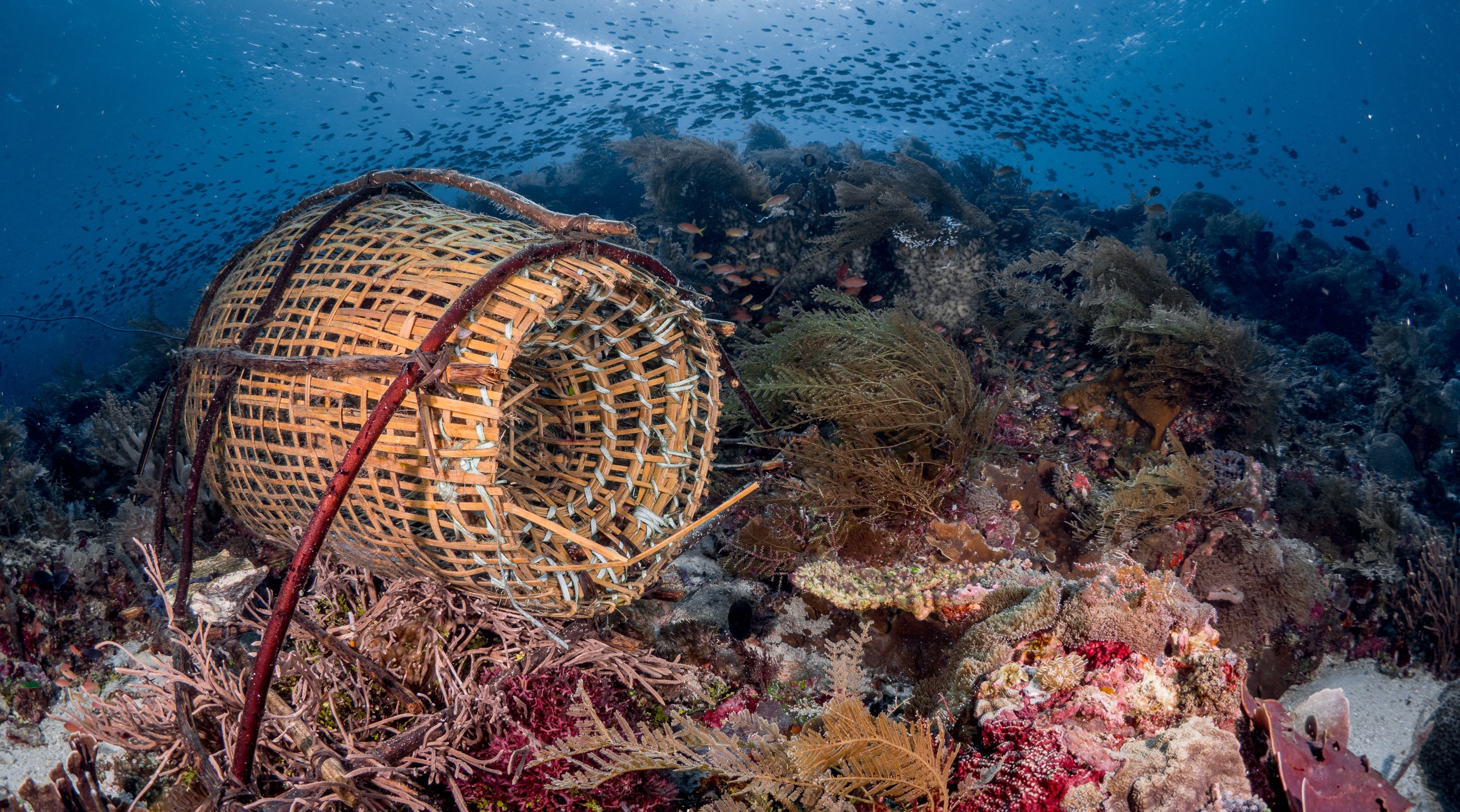
At Babylon Wall, traditional bamboo fish traps made by local fishermen rested along the reef slope, while dogtooth tuna moved through the blue beyond. Clouds of anthias covered the reef, sea snakes moved through the coral and large schools of fish gathered in the shallows. It was the kind of dive site that made you want to stay underwater for as long as possible.
For me, one of the biggest highlights came near Pantai Mali, on the northern coast of Alor.
We travelled by traditional local boat in search of Mawar, Alor’s famous resident dugong. There is always a feeling of anticipation when searching for an animal like this, but the encounter went beyond anything I expected.
Mawar approached the boat several times and, at one point, gently rested against it. Watching everyone observe him so closely and with such excitement was very special.
Later that same day, a pod of around 30 dolphins appeared nearby. We launched the tender and watched them play around the boat before disappearing back into the blue.
These moments are a reminder that nature sets the pace of a voyage. We just need to be ready when it decides to surprise us.
Our final days around Pantar brought together so much of what makes Eastern Lesser Sunda special.
.jpg?width=7808&height=4416&name=osmo%20maumere-alor%20(216).jpg)
At Cave Point, visibility stretched beyond 40 metres across one of the healthiest reefs of the voyage. We found a perfectly camouflaged painted frogfish among the coral, while traditional bamboo fish traps gave us another glimpse into the close relationship between the local communities and the sea.
On a quiet beach nearby, dolphins passed close to shore and our guests paddled out to watch them beneath the surface. Later, a local family came down from the hillside with their children.
Almost immediately, their children and ours began playing football, sharing toys and laughing together, despite not speaking the same language. Before long, everyone was snorkelling side by side over the shallow reef.
That moment stayed with me because it captured something that can easily be overlooked when we talk about a destination only in terms of reefs, wildlife and landscapes.
Eastern Lesser Sunda is not only wild and beautiful. It is also full of people, connections and small, unexpected encounters that give a voyage its real meaning.
From Maumere to Alor, we experienced erupting volcanoes, pristine reefs, reef sharks, dugongs, dolphins and island communities that welcomed us everywhere we went.
Our first Eastern Lesser Sunda voyage confirmed exactly why this route deserves a place in the Rascal collection.
This is Indonesia at its rawest and most rewarding, and I cannot wait to return.